
.png)
Key Takeaways
- Workplace fit-out costs depend on more than a simple $/m² rate. Building condition, project size, design quality, technology, furniture, sustainability and programme can all influence the final investment.
- In 2026, indicative investment levels range from $900–$1,500/m² for a workplace refresh, $1,500–$2,000/m² for a refurbished fit-out and $2,500–$3,500+/m² for a premium transformation.
- Market rates vary across Australia, with indicative ranges starting from $1,500/m² in Adelaide and reaching $3,500+/m² in Sydney.
- Landlord incentives can significantly reduce a tenant’s net capital contribution and should be considered alongside the total fit-out cost.
- Fit-out benchmarks are a useful starting point, but budgets should be refined alongside the workplace strategy, design, scope and procurement approach.
- The goal should not simply be to meet a target $/m², but to direct investment toward the elements that deliver the greatest value for the organisation and its people.
/Blog%20Posts/2609%20-%20Office%20Fitout%20Costs%20Across%20Australia/2026%20Office%20Fitout%20Costs%20-%20Indicative%20Workplace%20Investment%20Benchmarks%20across%20Australia.jpg?width=700&height=990&name=2026%20Office%20Fitout%20Costs%20-%20Indicative%20Workplace%20Investment%20Benchmarks%20across%20Australia.jpg)
Accurate workplace budgeting starts with understanding what drives cost, rather than simply applying a $/m² rate.
Every workplace is different. The condition of the existing tenancy, the aspirations of the design, the quality of the finishes, technology requirements, sustainability objectives, programme and the commercial terms of the lease can all have a material impact on the final project cost. A $2,000/m² fit-out in one building can look very different from a $2,000/m² fit-out in another. Similarly, two organisations with the same workplace size and headcount may have very different budgets depending on their priorities, existing assets and landlord contribution.
This guide provides indicative 2026 Australian workplace fit-out cost benchmarks to support early-stage budgeting and project planning. The figures are intended as planning guides rather than fixed rates and should be refined as the workplace strategy, design, scope and procurement approach are developed.
What Drives Workplace Fit-Out Costs?
Understanding the factors behind the numbers is just as important as the benchmark itself. The following considerations can materially influence the overall investment required.
|
|
Building ConditionThe condition of the existing tenancy and base-building services can have a significant impact on cost. Older buildings may require upgrades to electrical infrastructure, HVAC, fire services, hydraulics or other building systems before a new workplace can be delivered. Conversely, a recently refurbished building with strong existing services and quality base-building infrastructure can provide a more efficient starting point and reduce the amount of work required within the tenancy. |
|
|
Project ScaleProject size has a direct influence on the cost per square metre. Larger projects can generally benefit from economies of scale across construction, procurement, design and project management. Smaller projects, however, still carry many of the same fixed costs, including consultants, project management, mobilisation and site establishment. As a result, smaller workplaces can often attract a higher $/m² rate than larger projects. |
|
|
Live Workplace DeliveryDelivering a fit-out within an occupied workplace introduces additional complexity. Staged construction, temporary facilities, after-hours works, additional protection and noise management may all be required to maintain business continuity. These considerations can increase project costs but are often essential to allow an organisation to continue operating throughout the works. |
|
|
SustainabilitySustainability is increasingly becoming an important component of workplace investment. Clients are incorporating initiatives such as furniture reuse, low-carbon materials, energy-efficient services, improved lighting systems and sustainable material selections. While these initiatives can influence upfront costs, they can also reduce waste, improve operational efficiency and support broader ESG objectives. |
|
|
Technology & AVTechnology is now fundamental to workplace design. Hybrid working, video conferencing, collaboration spaces, room booking systems and integrated meeting technology can require significant investment. Technology and AV costs are also frequently managed separately from the construction budget, so care should be taken when comparing fit-out benchmarks to ensure the same scope is being compared. |
|
|
Furniture StrategyFurniture can represent a significant component of a workplace investment. The decision to purchase new furniture, refurbish existing assets or retain furniture from the previous workplace can materially change the overall project cost. A well-developed furniture strategy can therefore provide opportunities to reduce capital expenditure without compromising the overall workplace experience. |
|
|
Acoustic PerformanceAcoustic performance is increasingly important as workplaces become more collaborative and flexible. Meeting rooms, focus spaces, collaboration areas and open-plan workspaces all require careful consideration of acoustic treatment. Investment in acoustic design can improve privacy, concentration and employee experience and should be considered as part of the overall workplace strategy rather than treated simply as a finishing item. |
|
|
Design QualityThe level of design ambition is one of the most significant drivers of cost. Material selections, bespoke joinery, feature lighting, specialist finishes, hospitality-style amenities and branded environments can all increase the investment required. Importantly, higher cost does not necessarily mean better design. Effective workplace design is about directing investment towards the areas that provide the greatest value for the organisation and its people. |
/Blog%20Posts/Office%20Fitout%20Costs%20Across%20Australia/Building%20Condition%20Icon.png?width=37&height=37&name=Building%20Condition%20Icon.png)
/Blog%20Posts/Office%20Fitout%20Costs%20Across%20Australia/Project%20Scale%20Icon.png?width=37&height=37&name=Project%20Scale%20Icon.png)
/Blog%20Posts/Office%20Fitout%20Costs%20Across%20Australia/Live%20Workplace%20Delivery%20Icon.png?width=37&height=37&name=Live%20Workplace%20Delivery%20Icon.png)
/Blog%20Posts/Office%20Fitout%20Costs%20Across%20Australia/Sustainability%20Icon.png?width=37&height=37&name=Sustainability%20Icon.png)
/Blog%20Posts/Office%20Fitout%20Costs%20Across%20Australia/Technology%20%26%20AV%20Icon.png?width=37&height=37&name=Technology%20%26%20AV%20Icon.png)
/Blog%20Posts/Office%20Fitout%20Costs%20Across%20Australia/Furniture%20Strategy%20Icon.png?width=37&height=37&name=Furniture%20Strategy%20Icon.png)
/Blog%20Posts/Office%20Fitout%20Costs%20Across%20Australia/Acoustic%20Performance%20Icon.png?width=37&height=37&name=Acoustic%20Performance%20Icon.png)
/Blog%20Posts/Office%20Fitout%20Costs%20Across%20Australia/Design%20Quality%20Icon.png?width=37&height=37&name=Design%20Quality%20Icon.png)
The Influence of Landlord Incentives
One factor that is often overlooked when comparing workplace fit-out costs is the landlord incentive negotiated as part of a new lease or lease renewal.
Landlords may provide tenants with a fit-out contribution, cash incentive, landlord works, rent-free period or a combination of these benefits. The level of incentive can have a significant influence on the workplace a tenant ultimately delivers.
Where a substantial fit-out contribution is available, a tenant may be able to deliver a higher-quality workplace, incorporate additional amenities or improve the level of finishes without increasing its own capital commitment to the same extent. Conversely, where the landlord incentive is limited or unavailable, the tenant may need to reduce the scope, specification or quality of the fit-out to remain within its available budget.
This means that the total value of a workplace fit-out and the amount actually funded by the tenant are not always the same.
For this reason, benchmarking should consider the landlord incentive alongside the total project cost and the tenant's net capital investment. Comparing projects solely on a $/m² basis can otherwise produce misleading conclusions.
Three Levels of Workplace Investment
Rather than viewing fit-out costs as a single benchmark, we believe it is more useful to consider workplace investment across three broad levels: Refresh, Refurbish and Transform.
1- Refresh
Indicative investment: $900–$1,500/m²
A Refresh is generally appropriate where the existing workplace remains fundamentally suitable and the objective is to improve its appearance and functionality without undertaking a major transformation.
It may suit organisations looking to extend the life of an existing workplace, make targeted improvements or prepare a tenancy for changing workplace requirements.
Typically suited to:
- Existing workplace environments
- Minor layout changes
- Reuse of existing furniture
- Limited new meeting rooms
- Cosmetic upgrades
- Targeted services modifications
Typical scope may include:
- Carpet replacement
- Painting
- Feature graphics
- Selected lighting upgrades
- Meeting room technology
- Minor joinery
- Targeted workplace improvements
Office Fit-Out Refresh Success Stories
|
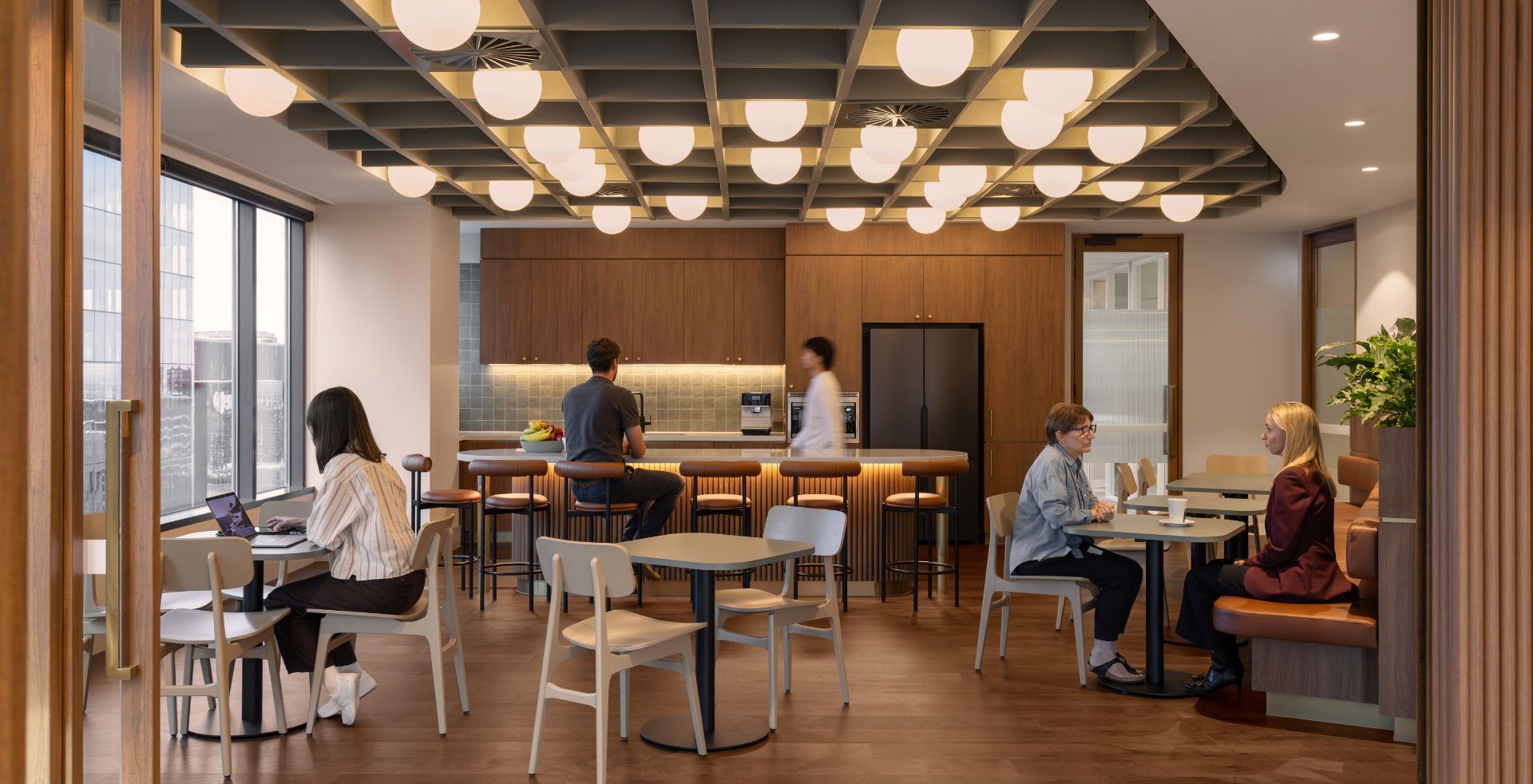
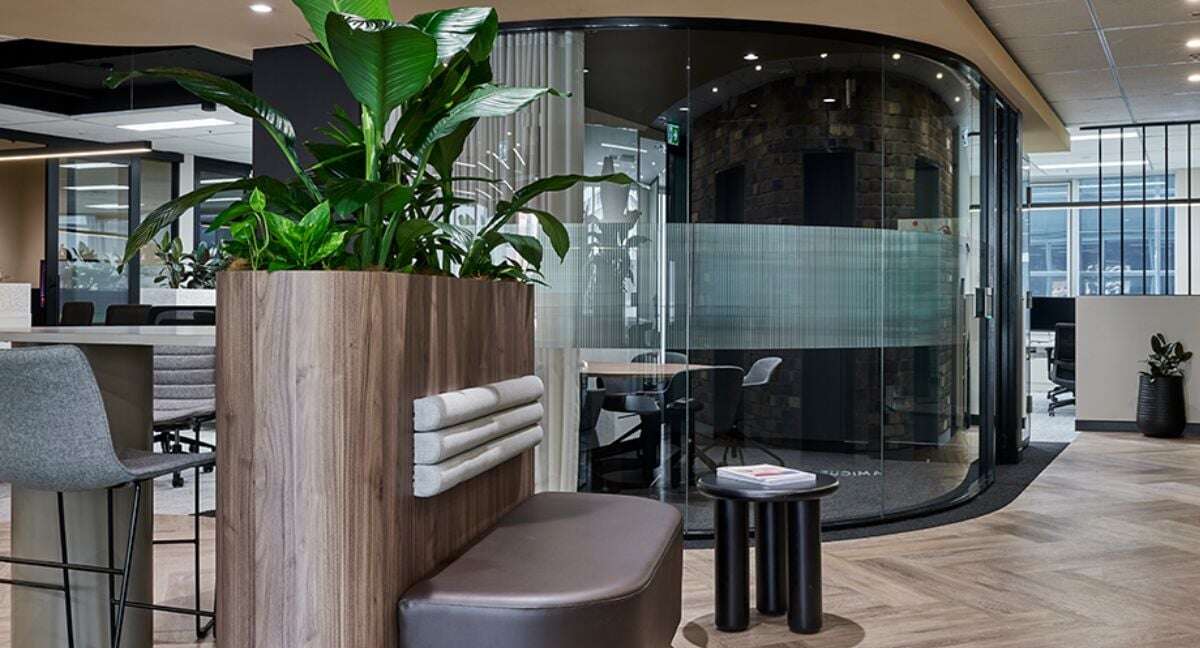
/Blog%20Posts/Office%20Fitout%20Costs%20Across%20Australia/Office%20Fitout%20Refresh%20-%20Greater%20Western%20Water%20by%20Amicus.png?width=450&height=300&name=Office%20Fitout%20Refresh%20-%20Greater%20Western%20Water%20by%20Amicus.png)
Greater Western Water | 1,500sqm |
/Blog%20Posts/Office%20Fitout%20Costs%20Across%20Australia/Office%20Fitout%20Refresh%20-%20Milwaukee%20Tools%20by%20Amicus.png?width=450&height=300&name=Office%20Fitout%20Refresh%20-%20Milwaukee%20Tools%20by%20Amicus.png)
2- Refurbish
Indicative investment: $1,500–$2,000/m²
A Refurbish represents a more comprehensive workplace upgrade. The focus is on creating a significantly improved workplace environment while making effective use of existing infrastructure and assets where appropriate.
This approach is often suited to organisations seeking a meaningful change in workplace experience without pursuing a premium, highly bespoke environment.
Typical scope may include:
- New workplace planning
- Collaboration spaces
- Feature reception
- Hybrid meeting technology
- Sit/stand workstations
- Improved staff amenities
- Higher-quality finishes
- New meeting and focus spaces
- Upgraded lighting and services
Mid-Tier Office Fit-Out Success Stories
|
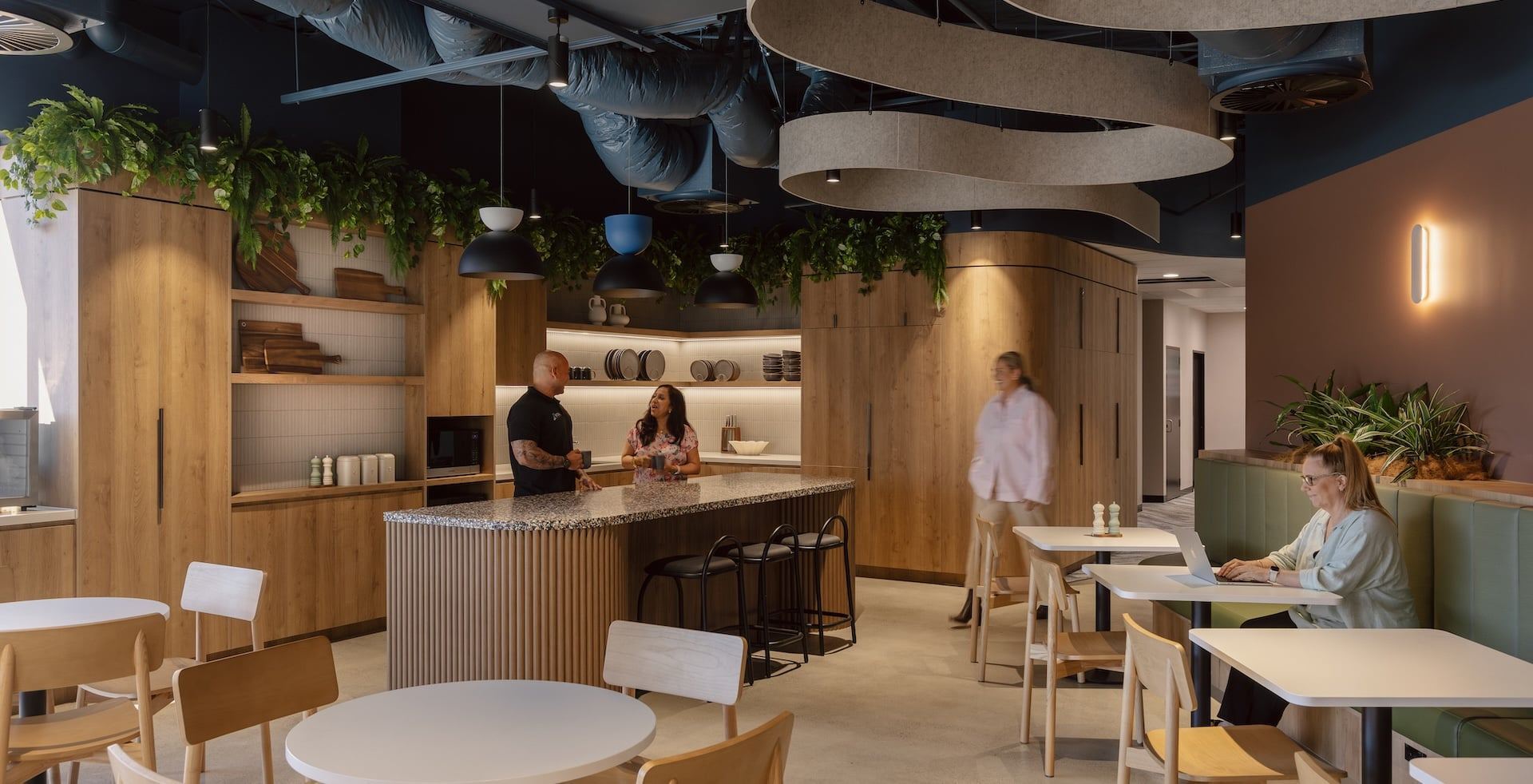
/Blog%20Posts/Office%20Fitout%20Costs%20Across%20Australia/Mid-Tier%20Office%20Fitout%20-%20Kyko%20Speculative%20Suite%20by%20Amicus.png?width=450&height=300&name=Mid-Tier%20Office%20Fitout%20-%20Kyko%20Speculative%20Suite%20by%20Amicus.png)
Kyko Speculative Suites | 590sqm |
/Blog%20Posts/Office%20Fitout%20Costs%20Across%20Australia/Mid-Tier%20Office%20Fitout%20-%20FMH%20Group%20by%20Amicus.png?width=450&height=300&name=Mid-Tier%20Office%20Fitout%20-%20FMH%20Group%20by%20Amicus.png)
3- Transform
Indicative investment: $2,500–$3,500+/m²
A Transform represents a premium workplace investment where employee experience, brand identity, client engagement and design quality are key priorities.
These projects typically involve a higher level of bespoke design, premium materials and integrated technology, with greater investment directed towards the areas that differentiate the workplace.
Typical scope may include:
- Premium finishes throughout
- Bespoke joinery
- High-performance acoustic solutions
- Feature lighting
- Hospitality-quality breakout spaces
- Premium staff amenities
- Client experience areas
- Integrated technology
- Enhanced AV
- ESG and sustainability initiatives
- Bespoke branding and design elements
Office Fit-Out Transformation Success Stories
|
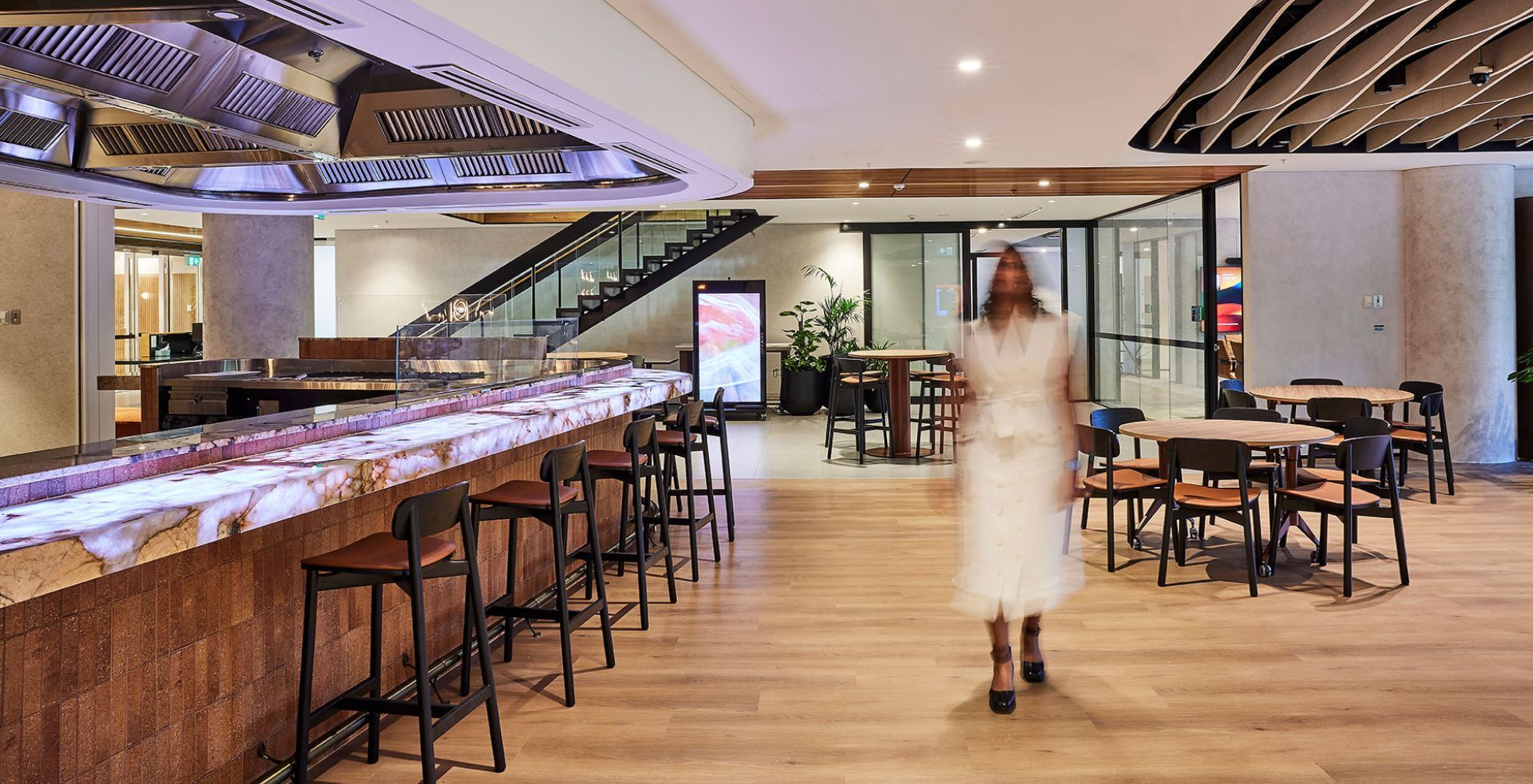
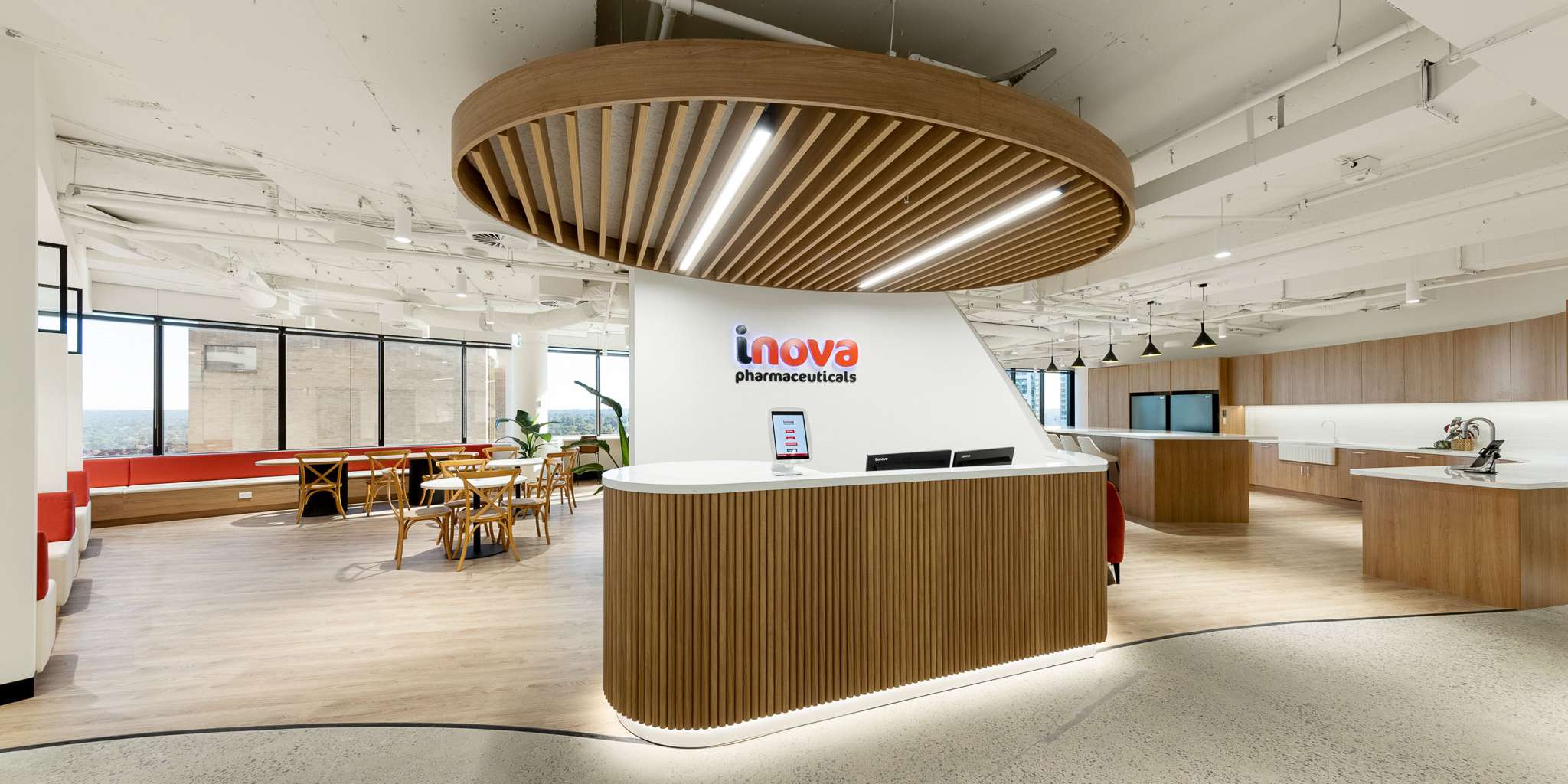
/Blog%20Posts/Office%20Fitout%20Costs%20Across%20Australia/Office%20Fitout%20Tranformation%20-%20Harry%20The%20Hirer%20by%20Amicus.png?width=450&height=300&name=Office%20Fitout%20Tranformation%20-%20Harry%20The%20Hirer%20by%20Amicus.png)
Harry The Hirer | 4,252sqm |
/Blog%20Posts/Office%20Fitout%20Costs%20Across%20Australia/Office%20Fitout%20Tranformation%20-%20Mazzei%20by%20Amicus.png?width=450&height=300&name=Office%20Fitout%20Tranformation%20-%20Mazzei%20by%20Amicus.png)
Australian Workplace Fit-Out Cost Benchmarks
Indicative market ranges across the major Australian markets are shown below.
|
|
|
|
|
|
/Blog%20Posts/2609%20-%20Office%20Fitout%20Costs%20Across%20Australia/Sydney%20Icon.png?width=120&height=80&name=Sydney%20Icon.png)
/Blog%20Posts/2609%20-%20Office%20Fitout%20Costs%20Across%20Australia/Melbourne%20Icon.png?width=120&height=80&name=Melbourne%20Icon.png)
/Blog%20Posts/2609%20-%20Office%20Fitout%20Costs%20Across%20Australia/Brisbane%20Icon.png?width=120&height=80&name=Brisbane%20Icon.png)
/Blog%20Posts/2609%20-%20Office%20Fitout%20Costs%20Across%20Australia/Perth%20Icon.png?width=120&height=80&name=Perth%20Icon.png)
/Blog%20Posts/2609%20-%20Office%20Fitout%20Costs%20Across%20Australia/Adelaide%20Icon.png?width=120&height=80&name=Adelaide%20Icon.png)
These ranges are intended to provide an initial indication of the potential capital investment required. Actual costs can vary materially depending on the building, project size, scope, specification, procurement strategy, programme and market conditions.
Using Benchmarks Effectively
A benchmark should be viewed as the starting point for a conversation, not the answer to the budget.
Before committing to a workplace budget, organisations should establish what they are trying to achieve, understand the condition and constraints of the building, identify what existing assets can be reused, assess technology and furniture requirements, and understand the commercial incentives available through the lease.
At Amicus, we believe the most effective approach is to develop the budget alongside the workplace strategy and design, allowing the scope and investment to be tested progressively. This provides clients with a clearer understanding of where their money is being spent and, importantly, where investment can create the greatest value.
The objective is not simply to achieve a target $/m² — it is to achieve the right workplace outcome for the investment available.
Planning a workplace project? We can help you understand the likely costs, priorities and opportunities before you commit to a budget. Enquire about an initial workplace consultation.
/Team%20Photos/Stuart%20Rogers%20Circle.png)
-2.jpg)
-2.jpg)
-2.png)

/Sectors/Office/contact-amicus.jpg)
